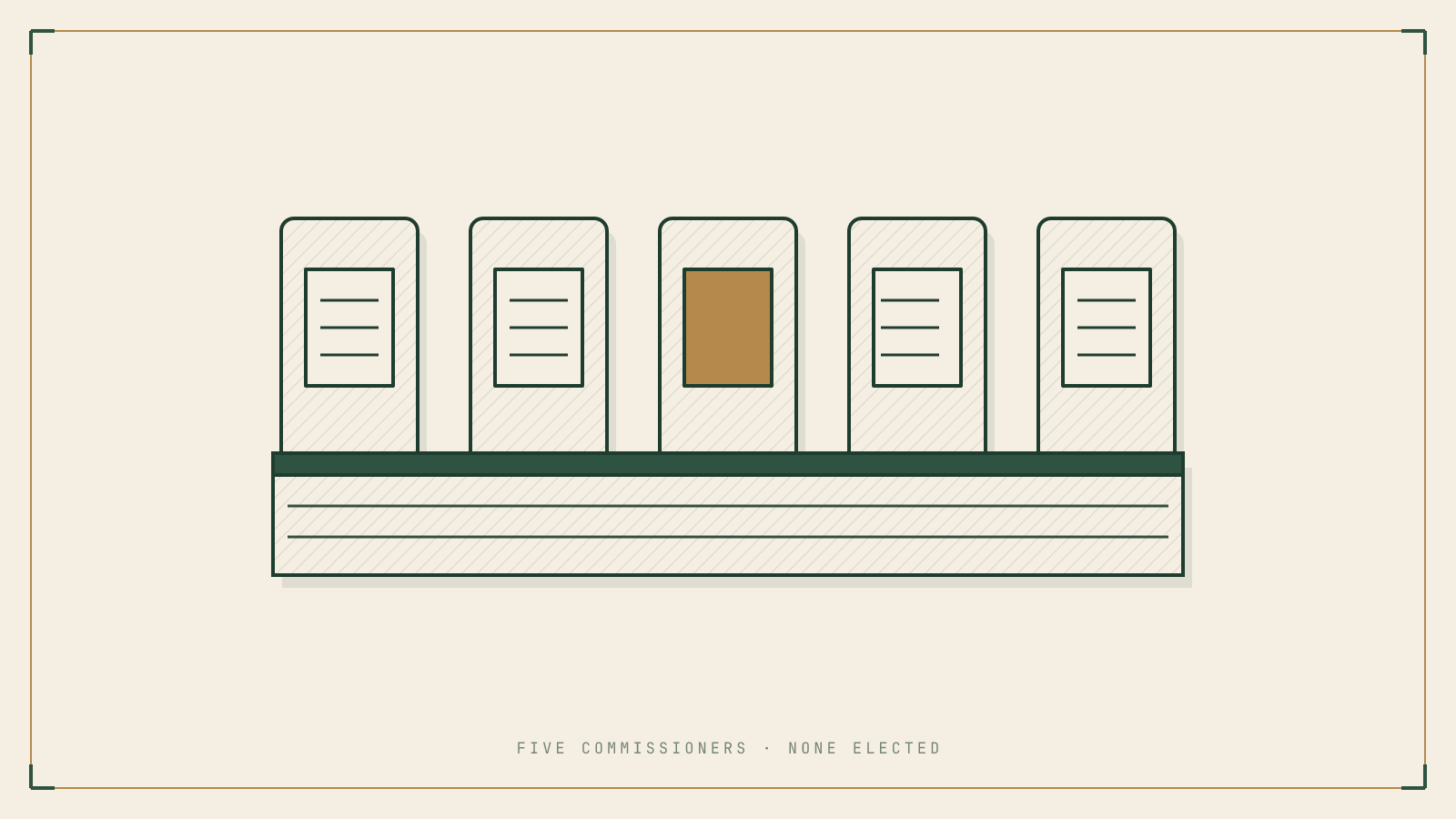
If you live outside a city in Louisiana, a good deal of what reaches your house is run by a board you have never voted for.
The water district. The sewerage district. The fire protection district. Each is a separate unit of government with its own board, budget, bonds, and, in most cases, taxing authority. The police jury creates them and appoints the people who run them.
The short version#
- A special district is a political subdivision — a unit of government, not a department of the parish.
- Most are created by the police jury, which also appoints the board. Voters generally do not elect them.
- They can levy voter-approved taxes, issue bonds, and set rates.
- They are inside the Public Records Law, the Open Meetings Law, and the Legislative Auditor's jurisdiction.
- The accountability route is documents and meetings. The ballot is mostly not available.
What makes it a district and not a department#
A parish road crew is part of the parish government. A waterworks district is not.
Under R.S. 33:3811, police juries "may divide their respective parishes into one or more waterworks districts, with such name or numbers as the police jury may designate." Once created, the district is its own legal entity. It holds property, signs contracts, borrows money, and can sue and be sued in its own name.
That separateness is the point of the structure. A district can pledge its own revenue to its own bonds without putting the parish's general fund behind them, and it can charge the people it serves rather than everyone in the parish.
It also means the district's finances are not the parish's finances. A parish audit will not tell you how the water district is doing.
Who picks the board#
For waterworks districts, R.S. 33:3813 is direct: "In the ordinance creating a waterworks district under this Chapter, the police jury shall appoint five commissioners recommended in the petition for the creation of the district."
Fire protection districts follow the same pattern. R.S. 40:1492 lets parish governing authorities create or enlarge them, and the parish appoints the commissioners.
So the chain runs: you elect a police juror, the jury creates the district and names its board, and the board sets your rate. There is no election in the middle, and district commissioners generally serve fixed terms that do not line up with anything on your ballot.
Some districts elect their boards. Some are governed by the police jury, which serves as the district's board. The enabling ordinance is what settles it, and it is a public record.
What they can do#
Tax. Districts can levy ad valorem property taxes and, in some cases, service charges, when voters in the district approve them. A millage on your tax bill labeled for fire protection or water is a district's levy, not the parish's.
Borrow. Districts issue revenue bonds backed by their own income and general obligation bonds backed by their taxing authority. Bond issues generally require State Bond Commission approval, and the commission's monthly agendas are public — one of the better early-warning systems for anything a district is about to build.
Set rates. For water and sewer districts, the board sets customer rates. The Public Service Commission does not regulate a district's rates, and neither does the parish. See who owns your utility for where the districts sit among the other models.
What reaches them#
Everything that reaches a public body, because that is what they are.
The Open Meetings Law defines a public body to include "any other state, parish, municipal, or special district boards, commissions, or authorities," where the body has policy-making, advisory, or administrative functions — and it says the definition includes any committee or subcommittee. A district board meets under the same rules as a city council: 24 hours' notice, an agenda described with reasonable specificity, a public comment period before any vote, and minutes that are public records.
The Public Records Law reaches their budgets, contracts, minutes, and correspondence.
The Legislative Auditor audits them. Every district files, and the reports are public.
Where the gap is#
Districts are the most transparent kind of local government on paper and among the least watched in practice.
A parish council race draws candidates, mailers, and a story in the paper. A waterworks commissioner is appointed in a police jury meeting, in a single line of the minutes, and serves for years. The rate you pay is set in a room that is legally open and usually nearly empty.
Nothing about that is improper. It is what the appointed-board model produces: real authority, real money, and no election to focus attention on either.
The practical consequence is that the ordinary tools of accountability — showing up, requesting an audit, reading the minutes — carry more weight here than almost anywhere else in local government because so few people use them.
How to look up your district#
- Find out which districts you are in. Your property tax bill lists the millages you pay and who levies them. Each line is a taxing body.
- Get the creating ordinance from the police jury. It establishes the boundaries, the board size, how members are appointed, and the terms of office.
- Pull the audit from the Legislative Auditor. Search the district by name. Go to the Schedule of Findings first, then the prior-year schedule — a finding that repeats matters more than one that appears once.
- Find the meeting. Districts post agendas under the Open Meetings Law. If you cannot find one, that itself is a question for the board.
- Ask for the rate history and the budget under the Public Records Law. Both are ordinary requests.
Accountability box: special districts in Louisiana
- What they are: political subdivisions created by the parish governing authority, separate from parish government.
- Common types: waterworks, sewerage, fire protection, recreation, drainage, hospital service, and economic development districts.
- Who creates them: the police jury or other parish governing authority, by ordinance.
- Who appoints the board: the same body, in most cases. Waterworks districts get five commissioners under R.S. 33:3813.
- Powers: levy voter-approved taxes, issue bonds, set rates, hold property, contract.
- Rate regulation: the board itself. Not the Public Service Commission.
- Open records and meetings: yes, both.
- Audit: Louisiana Legislative Auditor, under R.S. 24:513.
- How to reach them: the district's own office; the creating ordinance and audit are public records.